
Page Contents
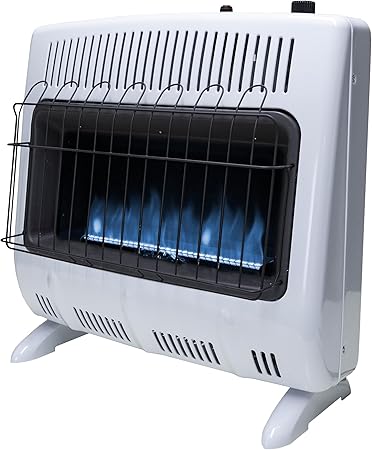
Details: Mr. Heater F299730 30,000 BTU Blue Flame Vent Free Propane Heater For Cold Rooms, Additions, Sun Rooms Cabins & Garage – White
Brand: Mr. Heater

Advantages
- Products can be returned
- POWERFUL PROPANE WALL HEATER: Provides up to 30,000 BTUs of heat, effectively warming rooms and cabins up to 1,000 sq. ft. Designed for reliable performance even at elevations up to 4,500 ft., ensuring consistent warmth in cold conditions.
- EASY CONTROL & IGNITION: This blue flame heater features a thermostat for accurate temperature control and a hassle-free startup with its battery-powered electronic ignition (battery included), making it simple and convenient to heat your space.
- SAFE HEAT WITH PROPANE INDOOR HEATER: Featuring an automatic low oxygen shut-off system (ODS) and CSA certification, this heater provides reliable performance, keeping your space warm while ensuring safety and peace of mind with every use.
- BLUE FLAME BURNER & CONSUMPTION: This gas wall heater features a blue flame burner for even convection heating, consuming fuel at a rate of 1.389 lbs per hour.
- VERSATILE MOUNTING OPTIONS: Designed for wall or free-standing use, this propane garage heater includes legs and mounting hardware for quick, easy installation to meet your heating needs.
Notice
- Is an online purchase
- Delivery may be delayed in some areas.


Buyer Guide For Patio Heaters
When shopping for a patio heater, consider factors such as heating capacity, fuel type, design, and safety features. Patio heaters typically come in three fuel types: propane, natural gas, and electric. Propane heaters are portable and easy to use, while natural gas heaters require a fixed gas line but offer continuous heating. Electric heaters are eco-friendly and ideal for smaller spaces.Look for a heater with sufficient BTU output to warm your desired area, and ensure it has safety features like tip-over protection and automatic shut-off. Additionally, choose a design that complements your outdoor decor, whether its a freestanding, tabletop, or wall-mounted model. Finally, check for weather resistance and durability to ensure it withstands outdoor conditions.
How to use Patio Heaters
Patio heaters are perfect for extending outdoor comfort during cooler months. Start by placing the heater on a flat, stable surface away from flammable materials. For gas heaters, connect the propane tank securely and check for leaks. Electric heaters simply need to be plugged into a grounded outlet.Turn on the heater following the manufacturers instructions, and adjust the heat settings as needed. Always ensure proper ventilation and never leave the heater unattended. Enjoy cozy evenings outdoors safely!
How to Maintain Patio Heaters
Regular maintenance ensures your patio heater works efficiently and lasts longer. Start by cleaning the exterior with a damp cloth to remove dirt and debris. Check for rust or damage, especially on metal parts, and address it promptly. Inspect the fuel lines or connections for leaks if using propane or natural gas. For electric heaters, ensure cords are intact and free of wear. Store heaters indoors during harsh weather or use protective covers. Always follow the manufacturers instructions for safe operation and maintenance. A well-maintained patio heater keeps your outdoor space cozy and safe!
Related posts:
Review Space Heater, 1500W Fast Heating Portable Ceramic Heater, 120° Oscillating Electric Heater wi...
Review Dyna-Glo 30,000 BTU Blue Flame Thermostatic Garage Vent Free Wall Heater, Black
Review ANTQUE 39 x 27.5inche Heated Blanket Electric Throw, USB Wearable Heated Throw Blanket Electr...
Review Indoor Kerosene Stove Heater, Portable Oil Heater Burner for Camping Cooking Heating, 4.5L La...

FBIA TEAM
Admin Tle Chubby man who loves technology and the changes in the world around him. (Around Me)