
Details: Patio Heater, 48,000 BTU Portable Heater with Patio Cover, Propane Outdoor Heaters for Patio, Backyard, Balcony with Wheels, Stainless Steel, Silver
Brand: VerisShade


Advantages
- Products can be returned
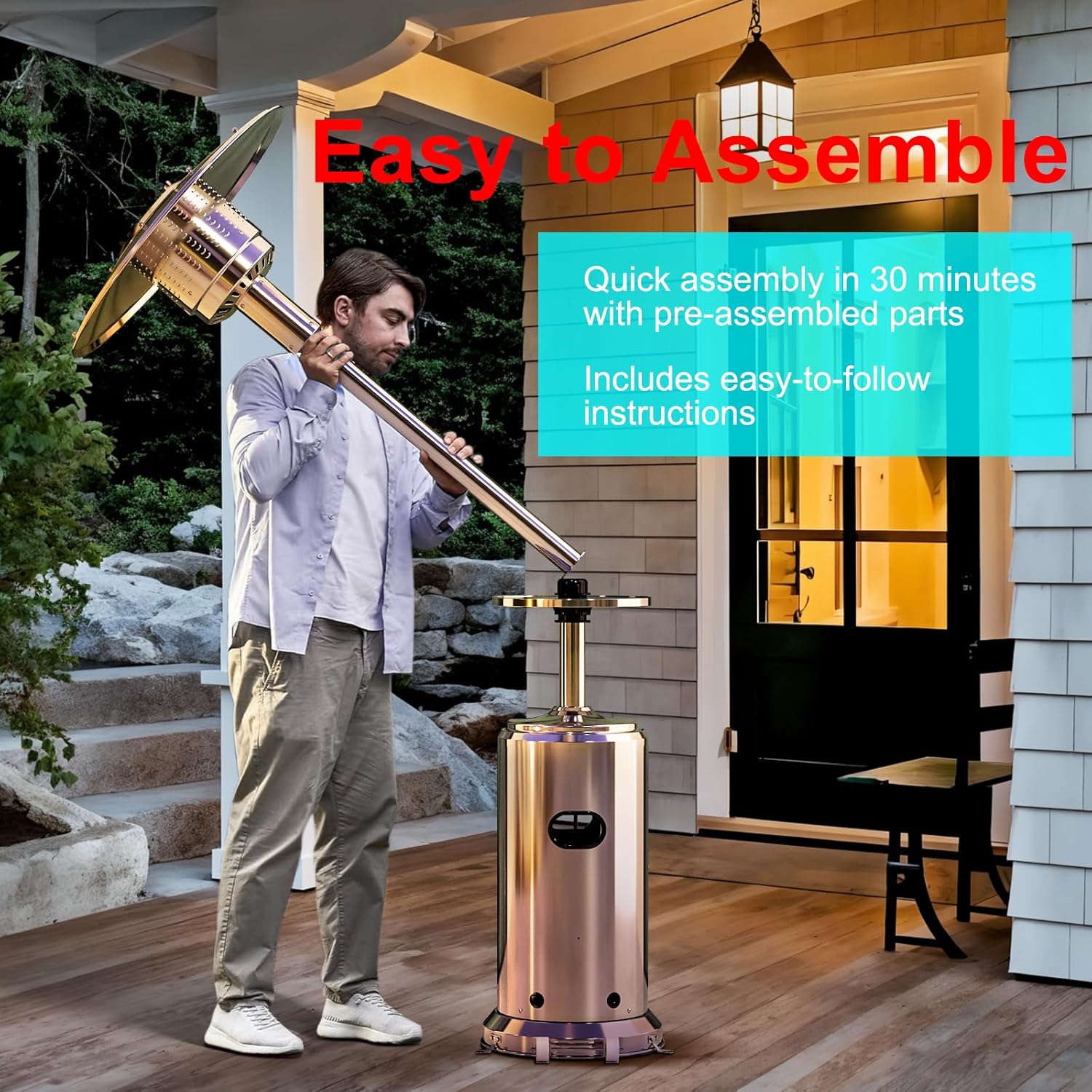
- OUTDOOR PATIO HEATING: The outdoor patio heater is 87-inch tall. The modern style design shape and clear glass tube with beautiful flame inside will decorate your yard and make your outdoor time more enjoyable in cool fall night.
- LONG-LASTING WARMTH: 48000 BTU output keep everyone warm and cozy on chilly evening. With standard 20 lb propane tank(not included), the outdoor patio heater can run continuously for 8-10 hrs. The side door offers you a easy access to change the propane tank as needed.
- HUMANIZED DESIGN: The outdoor gas heater features variable heat setting and built-in control valve that allow you to adjust the temperature to your liking. With two detachable wheels, the patio heater can easily move to anywhere you want.
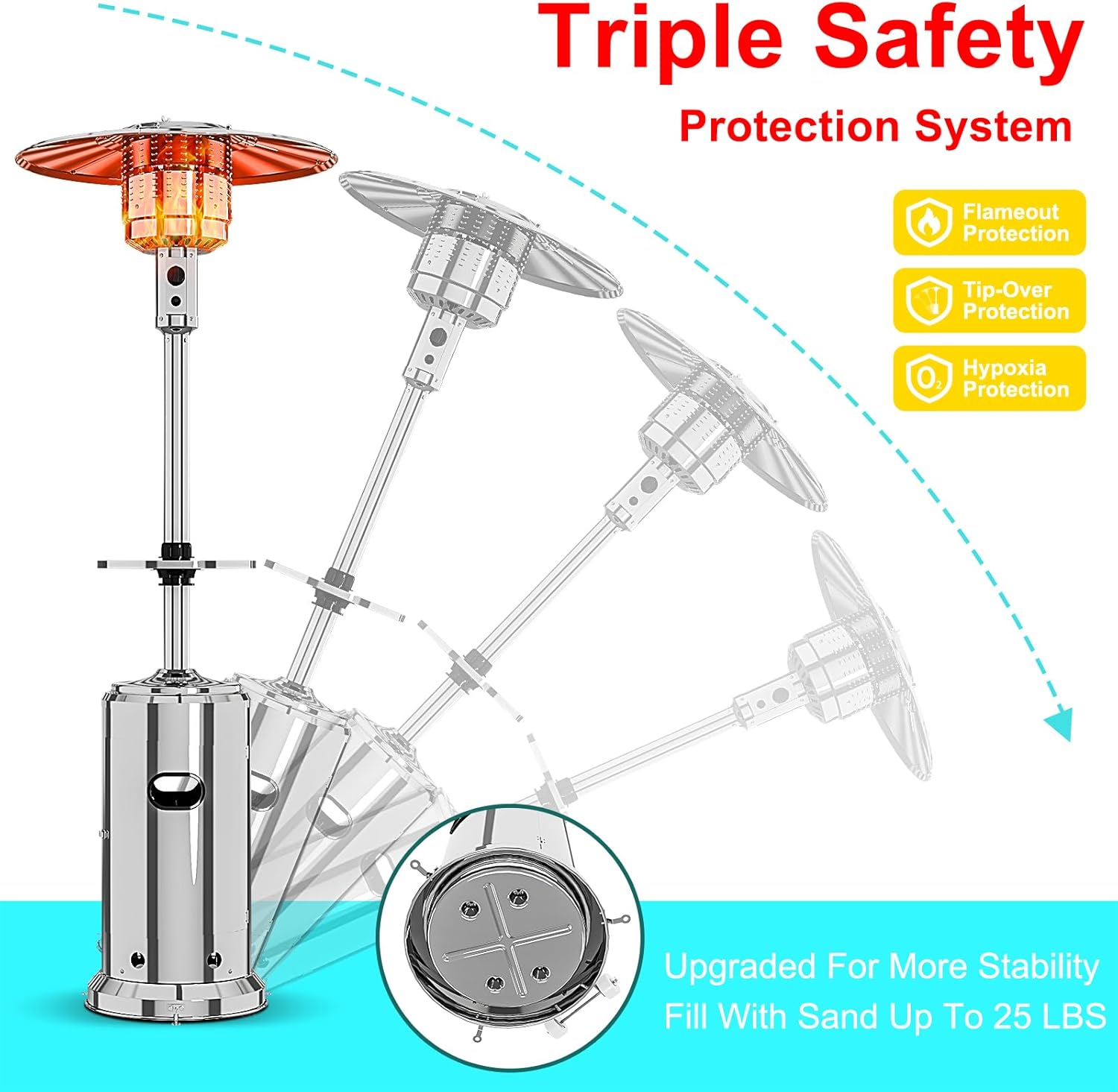
- GOOD PROTECTION: The outdoor propane heaters for patio has anti-tilt safety devices, which will automatically shuts off the heater when tilted over 45 degrees. Waterproof cover can protect the heater in bad weather or when not use and extend life.
- AFTER-SALE SERVICE: We aim for quality followed up with quality customer service directly provided by manufacturer. If you have any questions, please feel free to email us directly and we will reply to you within 24 hours. We offer free-exchange for any quality problems within warranty.
Notice
- Is an online purchase
- Delivery may be delayed in some areas.
Buyer Guide For Patio Heaters
Heat Output. Consider BTU (British Thermal Units) ratings – higher BTUs mean more heat coverage. Most residential patio heaters range from 40,000 to 50,000 BTUs.Fuel Type. Choose between propane, natural gas, or electric:
- Propane is portable but needs tank replacement
- Natural gas requires installation but offers continuous operation
- Electric models are easy to use but may have higher operating costs
Coverage Area. Determine the space you need to heat. Standard patio heaters typically warm 100-200 square feet of space.
Design Style. Select from:
– Standing/pole heaters
– Tabletop models
– Wall-mounted units
– Ceiling-mounted options
Safety Features. Look for:
– Auto shut-off if tipped
– Cool-touch exterior
– Weather resistance
– Safety certifications
Mobility. Consider if you need to move the heater around:
– Wheels for easy transport
– Weight and size
– Storage capabilities
Durability. Check for:
– Weather-resistant materials
– Warranty coverage
– Build quality
How to use Patio Heaters
Patio heaters are excellent solutions for extending outdoor enjoyment during cooler weather. Here’s a comprehensive guide on how to use them safely and effectively.Proper Placement
- Position the heater on a flat, stable surface
- Keep at least 3 feet clearance from walls, furniture, and flammable materials
- Avoid placing under covered areas with low clearance
- Ensure the heater is protected from strong winds
Starting and Operating
1. Check fuel levels (propane tank or electrical connection)
2. Follow manufacturer’s lighting instructions
3. Allow 5-10 minutes for the heater to reach full temperature
4. Adjust heat settings as needed for comfort
Safety Tips
- Never leave the heater unattended while in use
- Keep children and pets away from the unit
- Turn off and disconnect when not in use
- Store properly during adverse weather conditions
- Regularly check for damage or wear
Maintenance
- Clean the heater regularly
- Check fuel connections for leaks
- Replace parts as needed
- Store in a dry place during off-season
How to Maintain Patio Heaters
Regular maintenance of your patio heater ensures optimal performance and longevity. Start by cleaning the exterior with a damp cloth and mild soap. Check gas connections for leaks using soapy water, looking for bubbles that indicate problems. Clean the burner regularly to remove debris and ensure proper airflow.Store your heater in a dry place during off-seasons, and cover it when not in use. Inspect the ignition system and replace batteries as needed. For propane heaters, check tank connections and replace worn gaskets.
Always follow manufacturer guidelines and conduct safety checks before each use. Professional servicing is recommended annually for optimal performance and safety.
Remember to keep spare parts handy and address any issues promptly to avoid larger problems later.
Related posts:

Review Sunnydaze 40,000 BTU Forced Air Propane Heater - Portable Heat for Construction Sites - Auto-...

Review Hiland HLDS032-ADH 10' Propane Tank Adap TER Hose, Black

Review Dyna-Glo Vent-Free Wall Heat Fan

Review Mini Electric Fireplace Heater,Portable Heating Box Freestand 3D FLA-me Stove Log Burner for ...
