
Page Contents
Details: Mr. Heater F260550 Big Maxx MHU50NG Natural Gas Unit Heater,Black
Brand: Mr. Heater
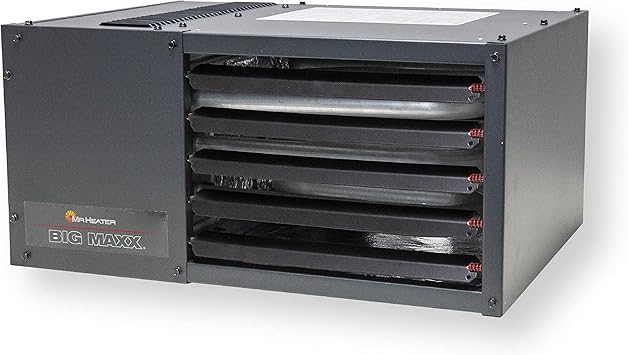
If you are looking to turn your garage or barn into a work space you can use all year-round, you will have to find a safe quiet and reliable heat source. This 50,000 BTU Natural Gas Unit heater is the way to go. It uses a built-in electric high velocity fan to pull cool air into the rear of the heater, across a heat exchanger, then forcing warm air into the surrounding areas. These heaters only require 115v AC power and can be vented vertically or horizontally – please check local codes and restrictions. With a mounting clearance of only 1 inch, the supplied brackets, external access to power, and thermostat connections – installation is a cinch. With the Durable Spark ignition and robust factory standard self-diagnostic control module, we can offer a 3 year factory warranty on all parts and burners and a 10 year warranty on any defects in the heat exchanger. This heater offers the operating versatility and safety that you have come to expect from Mr. Heater.

Advantages
- Products can be returned
- 50,000 BTU per hour heats up to 1250 sq. ft.
- Powered exhaust allows for vertical or horizontal venting
- Easy outside access to thermostat and A/C terminals and gas connection
- Natural Gas to Liquid Propane conversion kit and 2 angle brackets for ceiling mount included
- Minimum 8 ft clearance from floor to base of heater required; Limited 3 year warranty on parts and burners and 10 year warranty on any defects in the heat exchanger
Notice
- Is an online purchase
- Delivery may be delayed in some areas.


Buyer Guide For Patio Heaters
Fuel Type. Choose between propane, natural gas, or electric heaters. Propane is portable but needs refilling, natural gas requires installation but is cost-effective, and electric heaters are convenient but may increase energy bills.Heating Power. Look at BTU (British Thermal Units) ratings. Most residential patio heaters range from 40,000 to 50,000 BTUs. Higher BTUs mean more heat output and larger coverage area.
Coverage Area. Consider the size of your outdoor space. Calculate the square footage you need to heat and match it with the heater’s coverage capabilities.
Safety Features. Look for units with:
- Auto shut-off if tipped over
- Protective grills
- Weather-resistant construction
- Stable base design
Mobility. Consider if you need to move the heater around. Look for models with wheels if portability is important.
Weather Resistance. Ensure the heater is suitable for your climate and has proper weather protection features.
Style and Design. Choose a design that complements your outdoor d?cor. Options include standing, mounted, or tabletop models.
Cost and Maintenance. Factor in both purchase price and long-term operating costs. Consider maintenance requirements and parts availability.
How to use Patio Heaters
Patio heaters are excellent devices for extending your outdoor entertaining season by providing warmth during cooler weather. Here’s a comprehensive guide on how to use them safely and effectively.Choosing the Right Location
- Place the heater on a flat, stable surface
- Keep at least 3 feet clearance from walls and flammable objects
- Avoid placing under covered areas with low clearance
- Ensure proper ventilation in partially enclosed spaces
Starting and Operating
1. Check fuel levels (propane tank or electrical connection)
2. Follow manufacturer’s lighting instructions
3. Allow 5-10 minutes for the heater to reach full temperature
4. Adjust heat settings as needed for comfort
Safety Tips
- Never leave heaters unattended while in use
- Keep children and pets away from the unit
- Turn off and disconnect when not in use
- Store properly during adverse weather conditions
- Regularly check for damage or wear
Maintenance
- Clean regularly to prevent dust buildup
- Check fuel connections for leaks
- Replace parts as needed
- Store in a dry place during off-season
How to Maintain Patio Heaters
To keep your patio heaters in top shape, start with regular cleaning. Wipe down the heating element and reflectors with a damp cloth to remove dust and debris. Inspect the fuel source; for propane heaters, check the tank for leaks and ensure connections are secure. Perform seasonal checks on ignition systems and replace batteries if necessary. Store heaters indoors during the off-season to protect them from the elements. Always follow manufacturer guidelines for maintenance and safety, ensuring a warm outdoor space for years to come.
Related posts:
Review Heatstar HS250TC 250,000 BTU Nomad Construction and Tent Industrial Heater
Review Master MH-190T-KFA Kerosene Forced Air Heater with Thermostat, 190,000 BTU
Review Electric Heated Blanket 72"x84" Full Size with 4 Heating Levels and 10 Hours Auto-Off Large O...
Review LXXSH Double Winter Electric Blanket Cotton Beds Waterproof Adjustable Heating Electric Blank...
