Details: ProFusion Heat Ceiling-Mounted Garage Heater – 17,065 BTU, 240 Volts, Model Number HA24-50M
Brand: PROFUSION HEAT

This ProFusion Ceiling-Mount Garage Heater keeps your garage comfortably warm all season long. The space-saving, ceiling-mount design allows you to tilt this versatile heater vertically and/or swing horizontally. Fan-forced heat and an adjustable airflow keep you comfortable in every situation. For even greater control, use the adjustable thermostat with three settings 3000, 4000 or 5000 Watts to select your ideal temperature. Product Type Forced air, Product Style Permanent mount, Heat Settings 3, Plug Type Hardwired, Remote Included No, Blower Included Yes, Dimensions W x D x H in. 14 x 10 5/8 x 12 5/8, Volts 240, Watts 5,000, Thermal Cutoff Safety Device Yes, Thermostat Included Yes, BTU Output 17,065, Tip-Over Safety Switch No. Adjustable thermostat with three heat settings 5000 Watts 17,065 BTU, 4000 Watts 14,105 BTU and 3000 Watts 11,285 BTU Front-panel control switch Can be mounted to tilt vertically and/or to swing horizontally

Advantages
- Products can be returned
Notice
- Is an online purchase
- Delivery may be delayed in some areas.
Buyer Guide Natural Gas Space Heaters
Before you go shopping for a natural gas space heater, be sure to check out this buying guide.- Size. When choosing a heater, youll have to decide on how much space you want to heat.
- Efficiency. Efficiency is a measure of how much energy the unit uses to heat your home.
- Safety. Safety issues include, but are not limited to, fire hazard.
- Noise. Many units produce noise, so if youre sensitive to noise, be sure to choose a unit with low or minimal noise.
- Other features. Other features to consider include, but are not limited to, remote control, adjustable thermostat, and timer.
How to choose Natural Gas Space Heaters
Natural gas heating systems offer several advantages over other types of heating; these include lower operating costs, less maintenance costs, and minimal noise. However, there are some factors to consider before choosing a natural gas heater for your home. Heres what you need to know:
- Cost of heating: Natural gas costs more than electricity, but costs less than heating oil. Natural gas prices also vary by region; in some areas, natural gas is less expensive than electricity or heating oil, while in other areas it can be more expensive.
- Maintenance: Natural gas heating systems require less maintenance than most other heating systems – this can save you considerable time and money in the long run. Some natural gas systems also feature a self cleaning burner that helps to prevent buildup on the burner.
How to use Natural Gas Space Heaters
Natural gas space heaters use a similar concept as other space heaters, but they have the added advantage of using natural gas instead of electricity. There are several different types of natural gas space heaters available, but all of them operate using the same general method.To understand how natural gas space heaters work, you must first understand how natural gas is delivered to homes. Natural gas is delivered to your home through a pipe that reaches from a main gas line. Most homes have a single main gas line that reaches from the gas companys underground supply to your home.
When the gas company delivers natural gas to your home, it pushes the gas through a regulator valve. This valve releases a certain amount of gas into the home each time the main valve is open. This amount of gas depends on the size of the pipe that reaches from the gas line to your home.
When the main gas valve is open, it releases a certain amount of gas into the home. This amount of gas determines how much gas will be pushed through the regulator valve each time it is opened.
Because the amount of gas released into the home varies by the size of the pipe, the amount of gas pushed into the main valve will vary as well. Over time, this will affect the amount of gas pushed through the regulator valve and the temperature of the home.
Related posts:

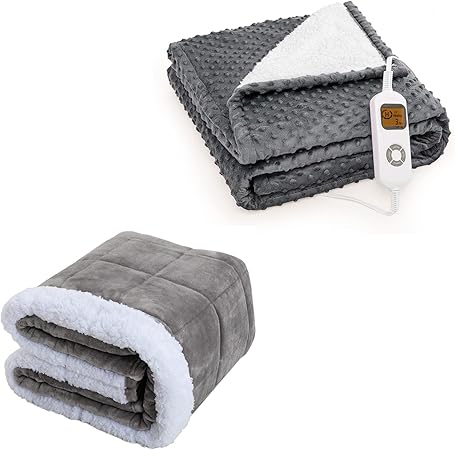
Review Mr. Sandman Minky Heated Blanket Electric Throw & Weighted Blanket Queen Size 15 lbs with Sof...
Review HUNTINGOOD Heater,Electric Heater,Space Heater,with1500W PTC, 3 Modes, 3s Fast Heating, Therm...
Review Qvkarw USB Blanket Office Blanket Inch Electric Pad Blanket Heating Multifunctional 60×80cm H...
Review Electric Blanket Heated Throw Blanket 3 Heating Levels Soft Warm Flannel Heating Throw Blanke...

FBIA TEAM
Admin Tle Chubby man who loves technology and the changes in the world around him. (Around Me)