
Page Contents
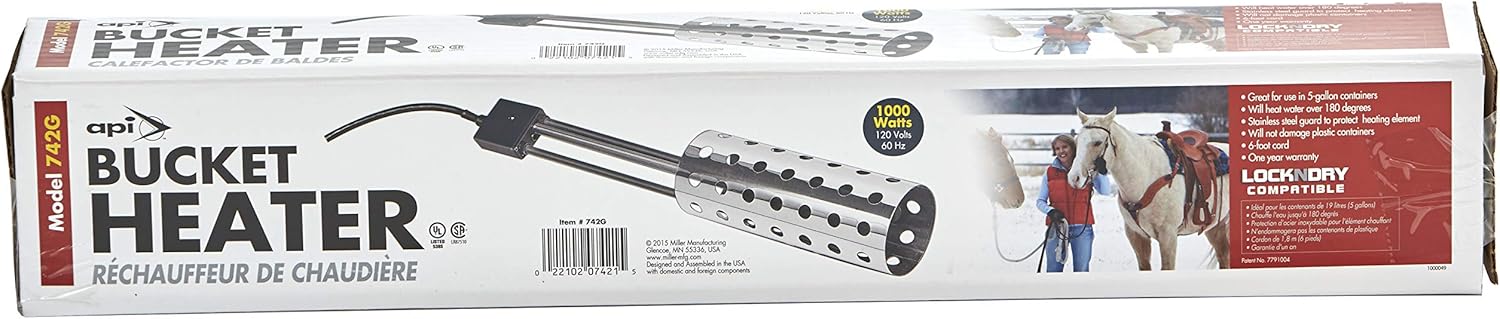
Details: API® Bucket Heater | Pail or Container Heater | Livestock Bucket Heater with Guard | 1000 Watt
Brand: API


Advantages
- Products can be returned
- CONSERVES POWER AND ENERGY – This heater has a built-in thermostat that conserves energy when water does not need to be heated.
- COMPATIBLE WITH RUBBER, FOAM & PLASTIC CONTAINERS – This heaters heating element includes galvanized wire guard to protect rubber, plastic containers.
- STAINLESS STEEL HEATING ELEMENT – This bucket heater has a stainless steel heating element that discourages rusting and corrosion over time.
- POWER CORD LENGTH – This deicer has a 6′ anti-rub power cord.
- SAFE DESIGN, CSA & UL LISTED
Notice
- Is an online purchase
- Delivery may be delayed in some areas.
Buyer Guide For Patio Heaters
Fuel Type. Choose between propane, natural gas, or electric heaters. Propane is portable but needs refilling, natural gas requires installation but is cost-effective, and electric heaters are convenient but may increase energy bills.Heating Power. Look at BTU (British Thermal Units) ratings. Most residential patio heaters range from 40,000 to 50,000 BTUs. Higher BTUs mean more heat output and larger coverage area.
Coverage Area. Consider the size of your outdoor space. Calculate the square footage you need to heat and match it with the heater’s coverage capabilities.
Safety Features. Look for units with:
- Auto shut-off if tipped over
- Protective grills
- Weather-resistant construction
- Stable base design
Mobility. Consider if you need to move the heater around. Look for models with wheels if portability is important.
Weather Resistance. Ensure the heater is suitable for your climate and has proper weather protection features.
Style and Design. Choose a design that complements your outdoor d?cor. Options include standing, mounted, or tabletop models.
Cost and Maintenance. Factor in both purchase price and long-term operating costs. Consider maintenance requirements and parts availability.
How to use Patio Heaters
Patio heaters are a fantastic way to extend the usability of your outdoor space, allowing you to enjoy your patio or deck even on cooler evenings. Whether youre hosting a gathering or simply relaxing outside, a patio heater can keep you warm and comfortable. Heres a quick guide on how to use them effectively and safely.1. Choose the Right Type of Patio Heater
- Propane Heaters: These are portable and easy to use. They require a propane tank, which youll need to connect securely.
- Electric Heaters: These are ideal for smaller spaces and require an electrical outlet. Theyre often more energy-efficient and emit no fumes.
- Natural Gas Heaters: These are permanently installed and connected to your homes gas line. Theyre great for long-term use but require professional installation.
2. Set Up in a Safe Location
- Place the heater on a flat, stable surface to prevent tipping.
- Ensure the heater is at least 3-5 feet away from any flammable materials, such as furniture, curtains, or plants.
- If using a propane heater, make sure the propane tank is securely connected and stored upright.
3. Follow the Manufacturers Instructions
- Always read the user manual before operating your patio heater. Each model may have specific instructions for setup, ignition, and operation.
- For propane heaters, check for gas leaks by applying a soapy water solution to the connections. If bubbles form, theres a leak, and you should tighten the connection or replace the part.
4. Light the Heater Safely
- For propane heaters, open the gas valve slowly and use the ignition button or a long lighter to light the burner.
- Electric heaters simply need to be plugged in and turned on, while natural gas heaters may have a pilot light or electronic ignition.
5. Adjust the Heat
- Most patio heaters come with adjustable settings to control the heat output. Start on a lower setting and increase as needed to maintain a comfortable temperature.
- Position the heater so that the heat is directed toward the area where people are seated.
6. Monitor the Heater
- Never leave a patio heater unattended while its in use.
- Keep children and pets away from the heater to avoid burns or accidents.
- If you notice any unusual smells, sounds, or performance issues, turn off the heater immediately and inspect it.
7. Turn Off and Store Properly
- When youre done using the heater, turn it off and allow it to cool completely before moving or storing it.
- For propane heaters, disconnect the tank and store it in a cool, dry place away from direct sunlight.
8. Maintain Your Heater
- Regularly clean the heaters exterior and check for any signs of wear or damage.
- Replace any worn-out parts, such as hoses or igniters, to ensure safe operation.
How to Maintain Patio Heaters
Maintaining patio heaters ensures longevity and efficiency. Start by regularly cleaning the exterior with mild soap and water to remove dirt and debris. Inspect the propane tank or gas connections for leaks using soapy water; bubbles indicate a leak. Ensure the reflector, screen, and burner are free of dust and rust. Check for any blockages in the burner holes. For electric heaters, inspect the power cord for wear. Store heaters in a dry place during off-seasons, and cover them to protect against the elements. Regular maintenance boosts performance and safety!
Related posts:
Review Dr Infrared Heater Portable Space Heater, 1500-Watt
Review Electric Heating Shawl Heated Blanket, 31.5" x 23.6" Ultra Soft Velvet Electric Heater Pad, P...
Review Dr. Heater Dr. Infrared DR-910M 10000-Watt 240-Volt Heavy-Duty Hardwired Shop Garage Heater w...
Review SSNG Kerosene Stove Space Heater Portable, Kerosene Heaters for Indoor Use,Kerosene Oil Heate...

FBIA TEAM
Admin Tle Chubby man who loves technology and the changes in the world around him. (Around Me)